As an Amazon Associate we earn from qualifying purchases. See our affiliate disclosure.
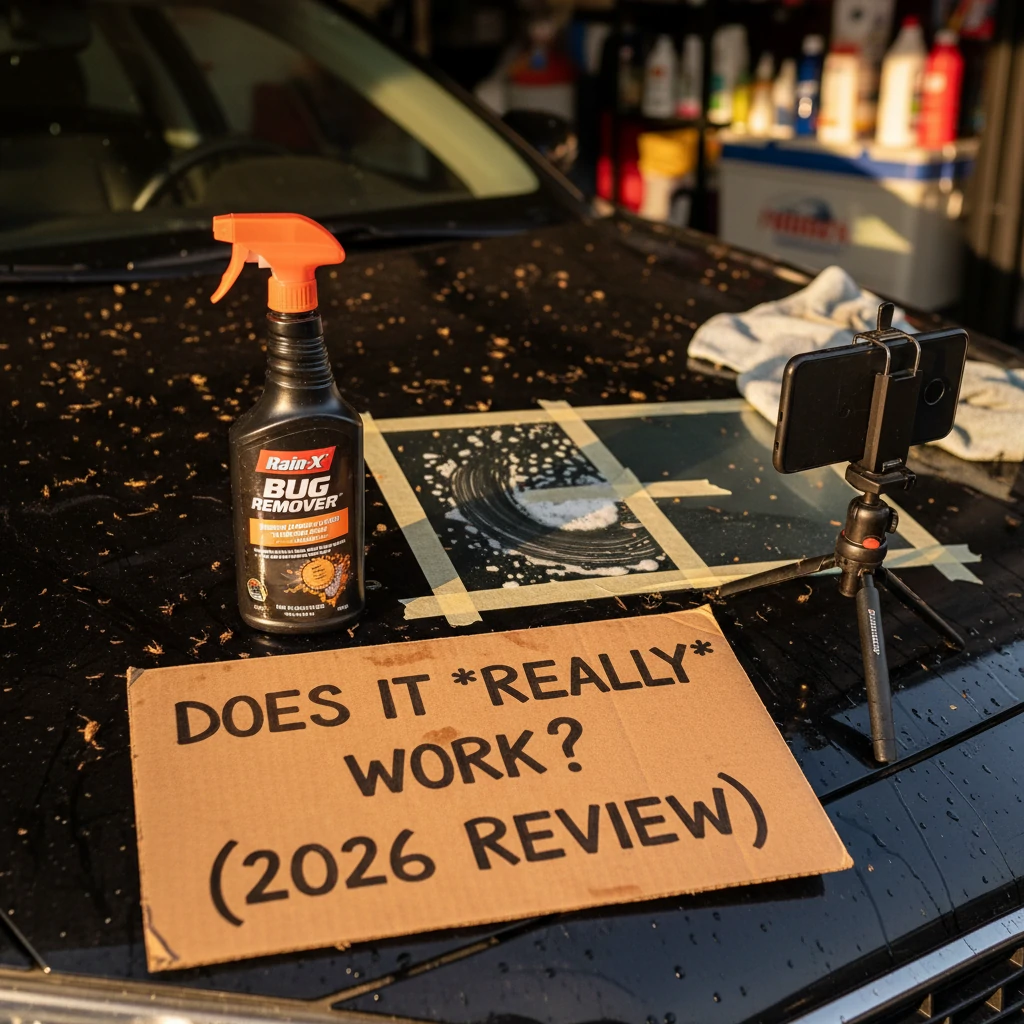
Bug residue should be removed without grinding debris into paint. This guide focuses on the current Rain-X directions and the compatibility checks that matter before using a solvent-based remover.
Research basis: This material update is based on desk research and the primary source below. AutoblingReviews did not perform hands-on product testing for this page.
Affiliate disclosure: We may earn from qualifying purchases through retailer links, at no added cost to you. Affiliate commission is not a ranking criterion.
How we researched this guide
We used the following decision criteria:
- Cool, shaded surface and stated dwell time
- Paint, plastic, glass, trim, and protective-product compatibility
- Residue severity, repeat application, rinsing, and follow-up protection
Evidence limit: The product page does not prove universal safety on every finish or superiority over generic alternatives.
Primary source checked
- Rain-X Pro 3-in-1 Bug, Tar & Adhesive Remover — Rain-X directs use on a cool surface in shade, with about a one-minute dwell before wiping.
For our full process, see the research methodology and editorial policy. Confirm the current label, instructions, compatibility, price, and availability before acting.
Compare current rain x bug tar remover listings on Amazon
What the manufacturer documents
Rain-X markets the current Pro 3-in-1 formula for bug residue, tar, and adhesive. Its directions call for a cool surface in the shade, a short dwell of about one minute, and removal according to the label. That supports a specific use process, not a blanket claim that it is harmless on every exterior material.
Before application
Identify the contaminated material: clear-coated paint, glass, unpainted plastic, film, wrap, trim, or another finish. Check both the Rain-X label and any care instructions for that surface. Remove loose grit first and test an inconspicuous area, especially on aged, repaired, wrapped, or coated finishes.
Application principles
- Do not apply to a hot panel or allow the product to dry on the surface.
- Use a clean, soft towel and minimal pressure so trapped grit is not dragged across paint.
- Repeat only as the label permits; stubborn contamination may require a different approved method.
- Wash away residue and inspect whether an existing wax or sealant needs maintenance.
When not to continue
Stop if the surface softens, discolors, becomes tacky, or transfers color to the towel. Etching, paint failure, and deep contamination may need professional assessment rather than stronger rubbing or longer dwell.
Bottom line
The official instructions provide a reasonable process for the named contaminants. They do not establish universal compatibility or a comparative winner, so the exact label and surface instructions remain decisive.